
Welsh women, weaving and cultural heritage
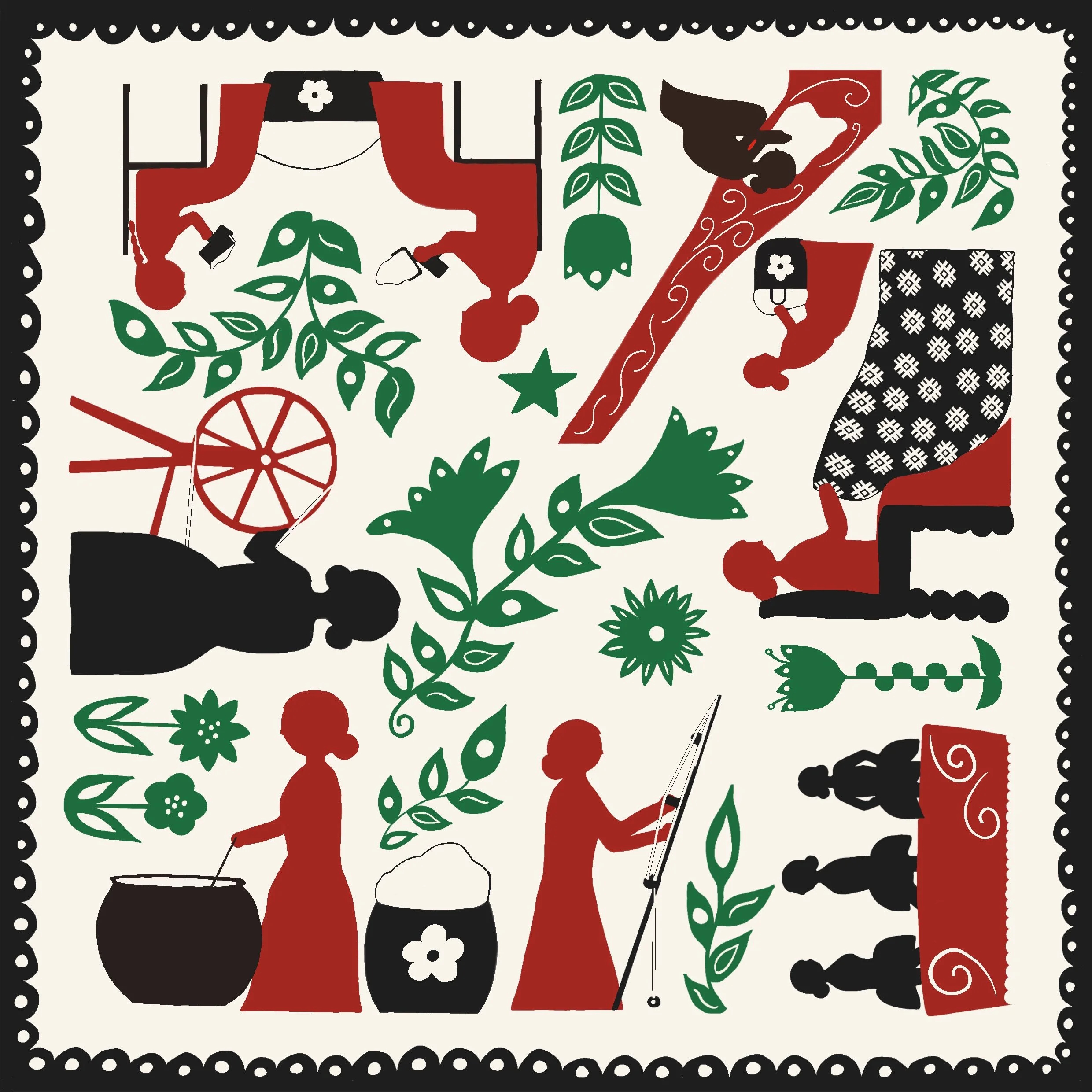
This illustration explores the rich tradition of Welsh textile-making, celebrating the labour, skill, and cultural knowledge of women. From washing raw wool to carding, spinning, dyeing, weaving, fulling, and finally sewing, each element represents a stage in the making process. Together, they form a visual reflection of craft as both practice and heritage.
At the heart of the piece is an emphasis on knowledge passed down through generations. Textile skills—particularly weaving—were not learned in isolation but shared within families and communities. Women gathered to work, teach, and learn from one another, creating textiles that were not only functional but deeply tied to identity, place, and tradition. This communal aspect of making is echoed in the composition, where figures and motifs are connected, reflecting collaboration and continuity.
The illustration also draws inspiration from regional Welsh textile patterns and forms, incorporating simplified motifs and repeating shapes that reference traditional blanket designs. These visual elements help ground the work in a specific cultural context while keeping a contemporary feel.
Rather than aiming to document the process precisely, the piece is a simple way of bringing together different stages of making into one space. The composition loosely follows the journey of wool through each step, reflecting the rhythm and repetition involved in textile work.
Ultimately, this work is a tribute to women’s craft traditions, recognising their role as makers, teachers, and keepers of cultural knowledge. It celebrates weaving not just as a technique, but as a shared practice that connects people, place, and history.